
On-street Residential Charging?
George Nixon, writing
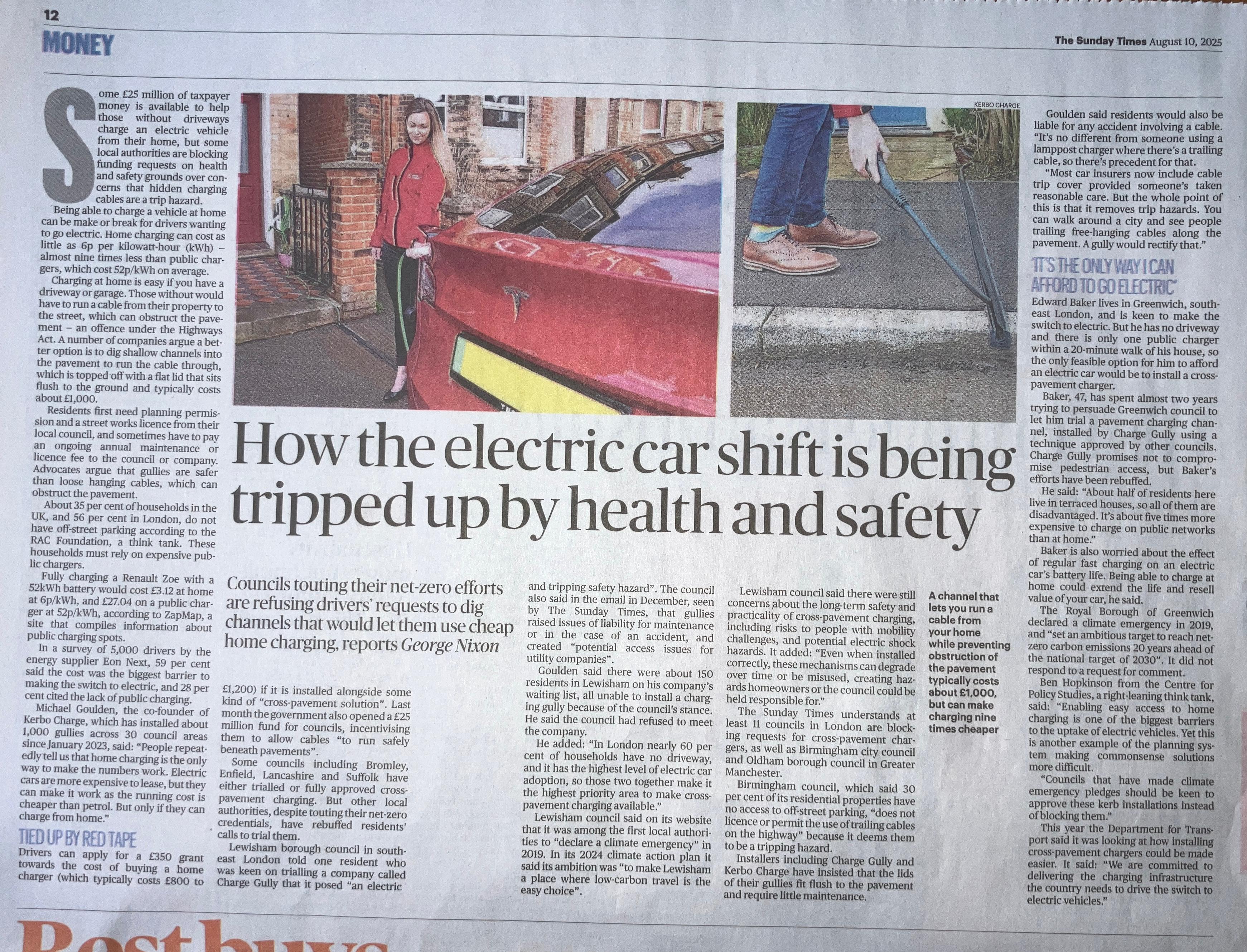
in the Sunday Times recently drew
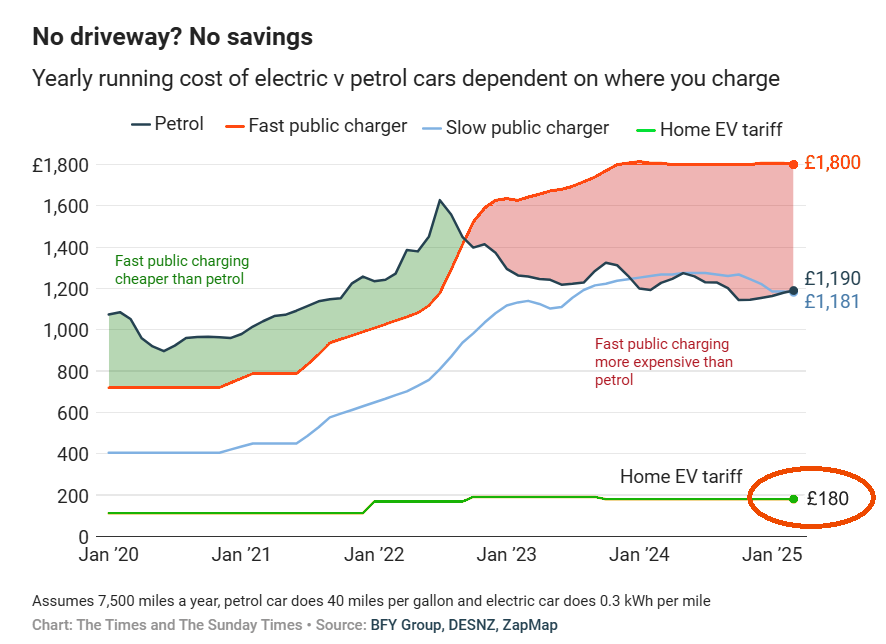
attention to the huge benefit of home-charging an electric car - and the
difficulty in achieving it if you don't have off-street parking at home.
The cost savings are startling:-
Besides the huge cost saving, there are also convenience benefits
to the owner, and several benefits to the nation:-
EV Owners
=
Save at least £500 per year. Off-peak, they buy the cheapest possible electricity (9p/kWh),
or even use free electricity if they have
solar panels.
=
They don’t have to park at a distant charge point, and walk in the dark to move the car to avoid overstay charges.
=
They can park outside their house, convenient for unloading kids and shopping, and where they can keep an eye on their car.
EV Transition and Air Quality
Having access to off peak electricity at home, removes an obstacle to ownership of an EV and improves urban air quality for everyone.

Electricity Generation
Facilitating overnight charging will:-
= Reduce the peak load on the grid,
= Make better use of overnight wind power,
= Minimise the need to build new power stations (to replace our end-of life nuclear plants).
= When the change from gas central heating to heat pumps increases the daytime electricity demand, it would be very helpful to push EV charging into the night, when the heat pumps are off
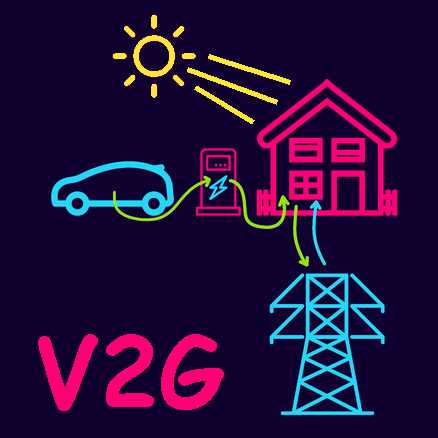
Vehicle to Grid and Vehicle to Home
The Octopus PowerLoop Trial with Nissan and Mitsubishi demonstrated that the huge batteries in cars can store solar or off-peak electricity for use in the home, or to profitably sell back to the grid at peak times.
It’s another way to relieve pressure on the generating capacity, and it needs cars to stay connected for long periods – at home.
Electricity Distribution
Many public charge point installations are now held up, waiting for connection to the grid.
Home charge points don’t need any new grid connection because a 7kW home charger is no greater load than a 7kW electric shower, or an electric cooker.

Levelling Up
The 6 million households who have to park on the street – unable to
use their own cheap overnight electricity
should not have to pay more to charge their cars.
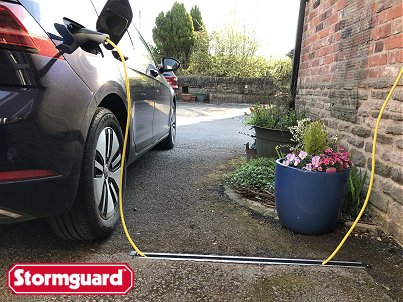
Two products lead the field in terms of minimising the cross-pavement trip hazard
by holding the cable below ground level:-
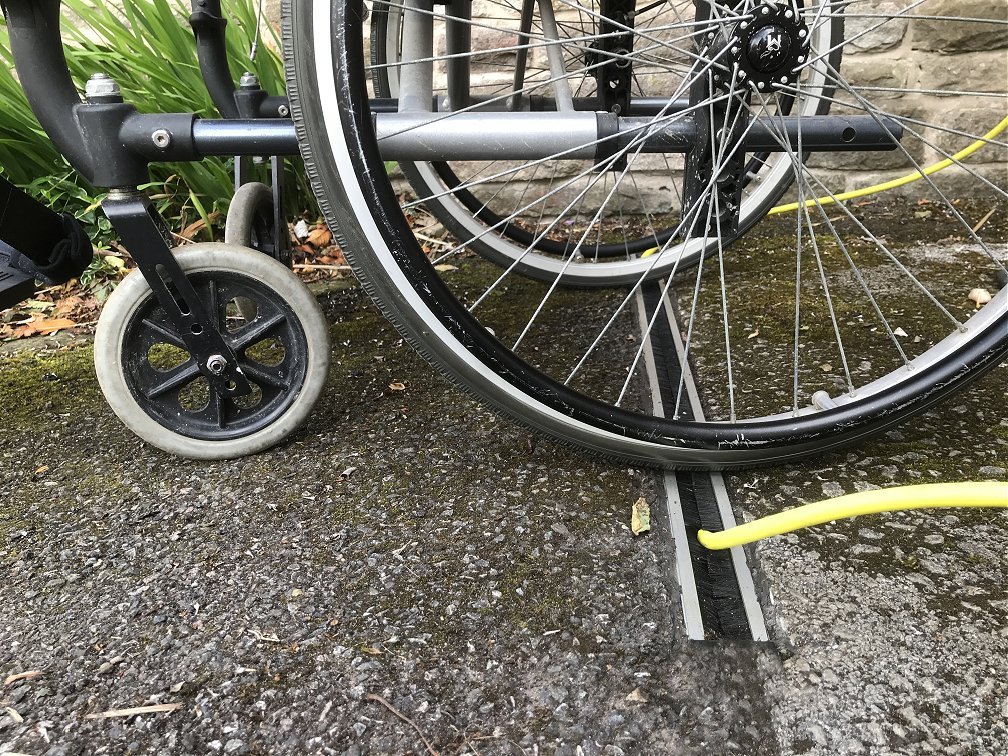
Stormguard and
Kerbo Charge.
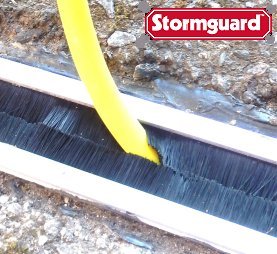
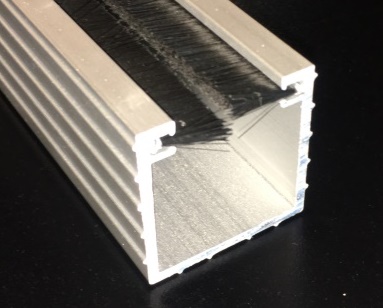
Stormguard use brush strips to hold the cable down,
which makes it marginally easier to insert the cable than Kerbo Charge
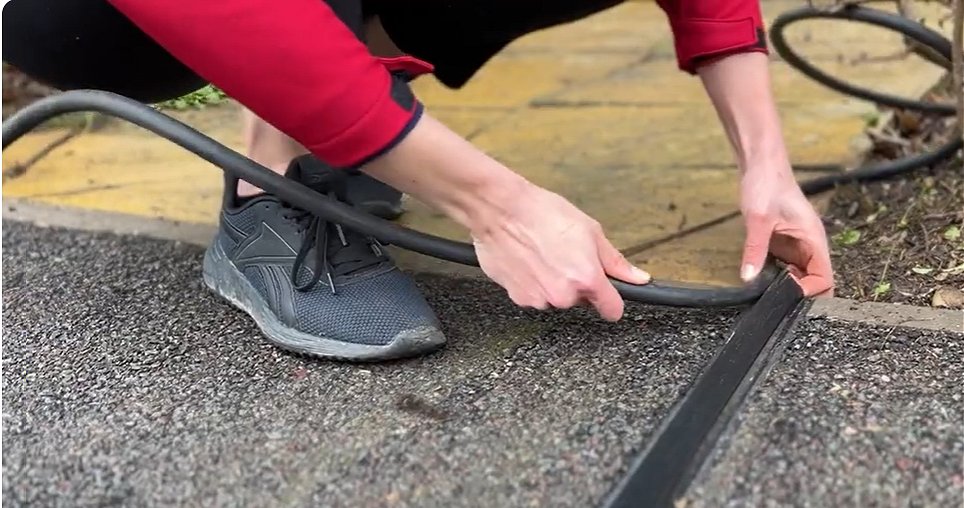
(it requires less bending down), while Kerbo Charge use a rubber flap to hold
the cable down, and the flap removes any concern about stiletto heels
entering the channel.
Stormguard have mainly sold to the building trade, providing an anti-trip
solution on private land.
Kerbo Charge have a higher public profile, having secured investment by
Deborah Meaden on Dragons Den, and have put a lot of time into persuading
about 10% of the UK's 300 local authorities to approve their product.
Both products require only a 5cm wide and 5cm deep incision in the pavement,
but public pavement installation has to be carried out by a council approved contractor,
and the cost tends towards £1,000 unless any grant funding can be applied.
Those councils who resist this innovation, express concern about whose
responsibility it would be if the product failed generating a hazard in
some way, or required the council to rectify any problem.
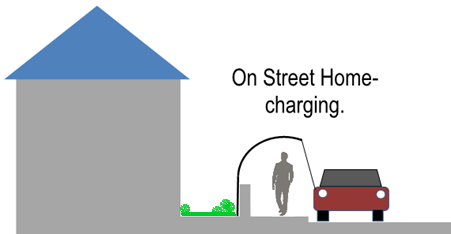
So there appears to be a need for a
quick-to-install and low-cost way of keeping the cable
out of the way of pedestrians without disturbing the pavement.
How would FlexEV compare with the cable channels:-
- Visually: Much less discrete
than the channels, but also only deployed when needed, and quick to
remove. (2 minutes without tools).
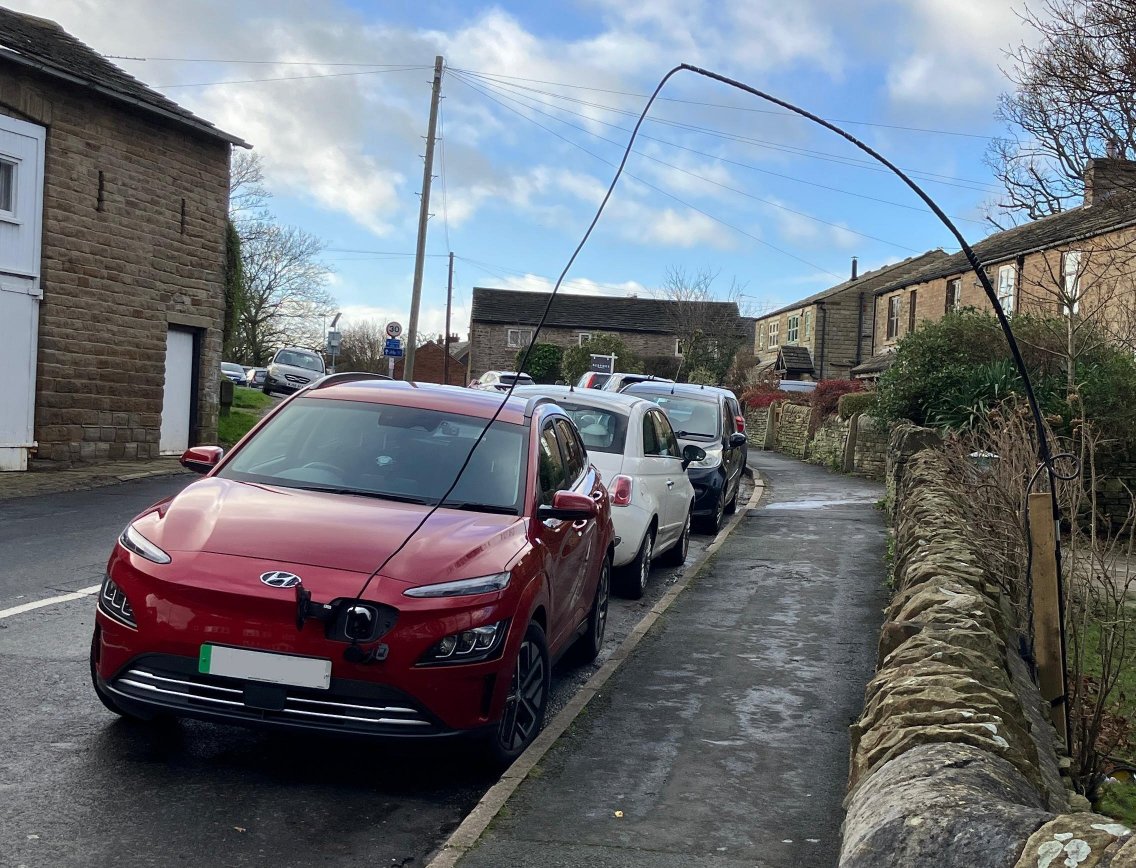
- No more of an obstruction than avenue trees:-
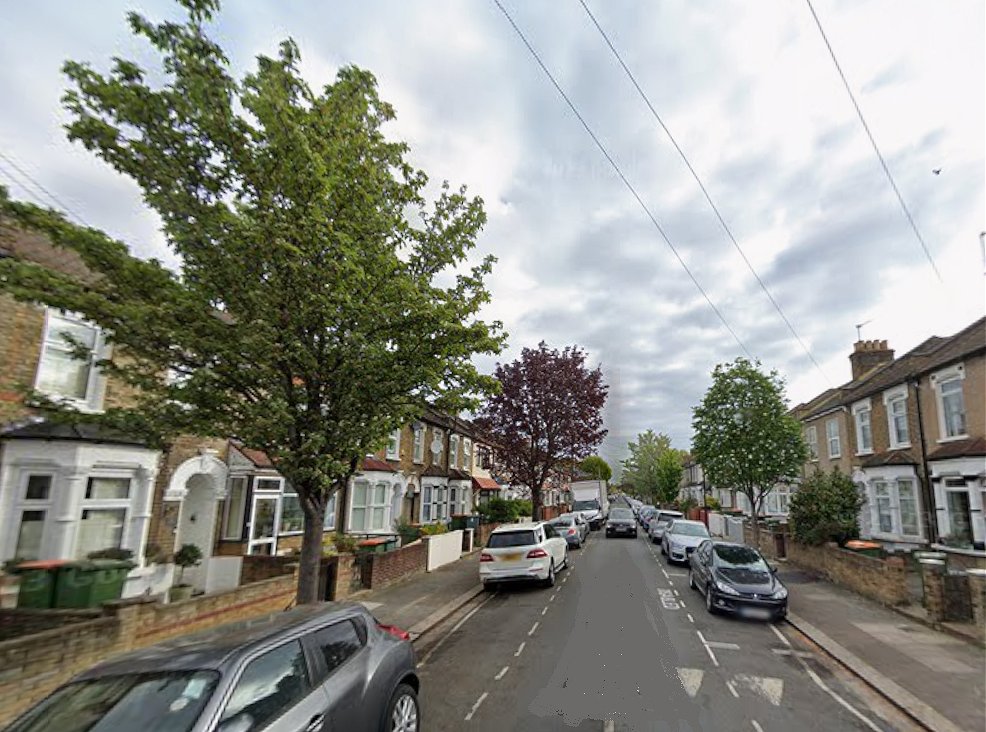
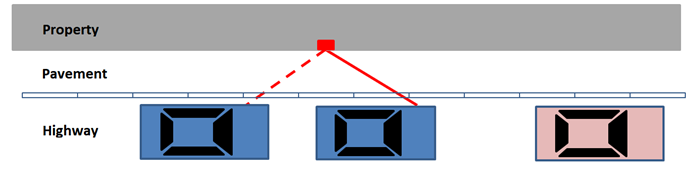
- Very tolerant of variable parking position:
The arc covered by the wands gives flexibility.
- No disturbance of council-owned pavements.
- Better than a channel on loose surfaces
such as grass or gravel, and accommodates steep or stepped hard surfaces.
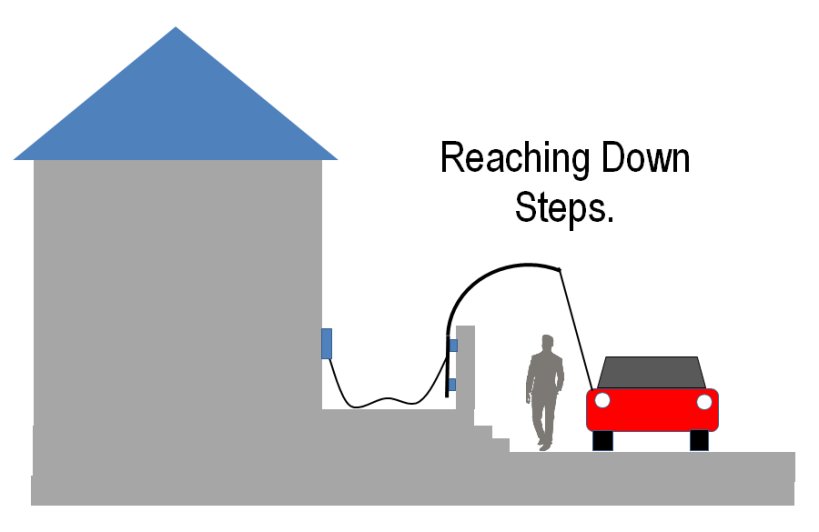
- Speed of installation: Only three screws are
needed to fix the base wand to a wall or post.
- Speed of removal: the wands
and cable can be simply lifted off the base and put away in about 2
minutes - or the
assembly can be simply swivelled around, away from the street and over
the owner's property.
(Low-mileage users might only deploy the wands for a few hours once a week).
- Low Cost: If used to enable cheap off-peak home charging, the cost
of £50 could be recovered in just a couple of weeks.
(E.G. 9p/kWh instead of 60p, and the car travels 3 miles per kWh =3x£50/51p= 294 miles to recover the cost - that's about 2 weeks at the average 8,000 miles per year)
£49.50 including postage.

Ebay item:- 227094215096
More Information
Technical Support Tel: 07825 702020